
Garlic (Allium sativum) is thought to be native to Central Asia. East of its homeland lies China and far to the West is Europe, where the Mediterranean region provides it with an ideal environment. Yes, the Mediterranean region is an ideal ecosystem for growing garlic. Its combination of mild, wet winters and warm, dry springs perfectly aligns with garlic’s natural growth cycle. The optimal temperature range for growth is 8° C to 20° C, followed by a hot, sunny period for the corms to mature.
But traditional Chinese medicine and European herbalism regard the therapeutic applications of this one species somewhat differently. Among a range of uses, prominent in Western herbalism are its applications in respiratory infections, circulation and heart health (high cholesteral, high blood pressure) and metabolic syndrome (including type 2 diabetes). On the other hand, in China it is known almost exclusively as a remedy against skin and intestinal parasites, diarrhoea, gastroenteritis and abscesses/sores. It is actually classified in Chinese pharmacopoeias under “Herbs that Expel Parasites”.
Although the two traditions do align on its potential to treat infections and help prevent influenza, there nevertheless seems to be a different focus, or a different perspective on garlic’s range of actions and applications, with the West’s seeming more ample in scope.
Is it the same garlic? A friend remarks that the garlic commonly used in Thailand has very small cloves and is not as pungent as European garlic. Certainly different varieties of a plant can have different forms and chemical profiles and therefore different effects on the body, just as different breeds of dog have different shapes and sizes and different capabilities. But I’m not convinced this is behind the difference in how garlic is viewed in the Chinese and Western herbal traditions.
Medicinally both traditions use the same species of garlic (Allium sativum), just as a dog is a dog is a dog (Canis lupus familiaris), and the fundamental similarities between different varieties (“cultivars” in the botanical world, breeds in the dog world), and which separate them from other species, overwhelmingly outweigh their differences.
I am more inclined to put it down to different traditions having focused their attention on different aspects of the plant’s range of actions. For example, it is known in the West too that garlic has powerful antimicrobial properties (in the past interpreted as warding off evil), but our recent attention has been attracted to its ability to reduce blood cholesterol and blood sugar levels and treat the “modern disease” of metabolic syndrome. These things would have been far less prevalent (and to an extent unrecognised) in rural Chinese populations in past times, whereas infectious and parasitic illnesses would have been common.
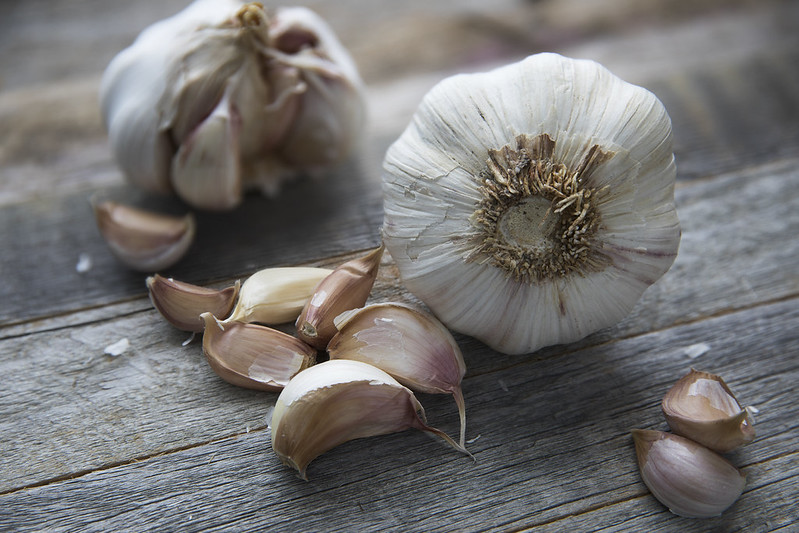
Photo by Kjokkenutstyr.net, via Flickr.com. CC BY 4.0 licence.