
The use of plants as medicine is most probably, along with massage, one of the first kinds of medicine on the planet. The knowledge of medicinal plants and their uses would have been built up over generations through a process of observation, trial and error. In essence, that is science! Albeit of a very basic sort. The earliest use of plants as medicines would have been very much like the way you use over-the-counter medicines today. You have certain symptoms, say from a cold or stomach upset or a physical trauma, and you get from the pharmacy a kind of medicine that will ease those symptoms. Likewise, ancient people may have learned that if they took willow leaf their colds felt better or their pain was relieved, or sweet basil improved their digestion and calmed abdominal pain from cramping. From those simple beginnings some very sophisticated systems of herbal medicine have evolved, such as those developed in India and China, which are still used as primary methods of healthcare for millions of people in rural and out-of-the-way areas. Today there are various different ways of using herbs to heal. Let us look at some basic differences in how herbal medicine is practised.
The first distinction we can make is between folk and professional herbalism. Folk herbalism consist of practices used in communities that have been passed down through the generations mostly through oral transmission. It is practised either in the family or by a local person with more specialised knowledge for whom however it is not primarily a source of income. In Europe the “wise woman” would commonly be such a person and would also be responsible for local midwifery. Professional herbalism is practised for a living by people who have undertaken formal study of botanical and medical sciences as well as the uses of medical plants and the science behind such uses. Greater “book knowledge”, though, does not necessarily make a better practitioner!
One way in which herbs are used nowadays is the same as that outlined in the introductory paragraph above: a certain herb is recognised as effective against a certain complaint and taken or given for that complaint. We could call this allopathic herbalism. This is what herbalists in the wise woman tradition have been doing “for ever”. In contrast to this, many herbalists practise what I will call vitalistic herbalism, in which herbs are described in terms of their vital qualities or “energetics” such as Hot, Cold, Dry and Wet. I write these terms with capital letters to indicate that they are not necessarily to be taken literally. A Cooling herb is given for a Hot condition, a Drying herb for a Damp condition. As a concrete example urinary infections such as cystitis are generally considered Hot Dampness and so need Cool Dry herbs to cure them. In my view the allopathic approach is often the most useful when dealing with acute conditions or flare ups, while the vitalistic approach is better for chronic conditions or between flare ups if the disorder has a recurrent pattern.
Another distinction we can find in the practice of herbal medicine is between analytical and holistic approaches. Some herbalists are very interested in the chemical constituents of herbs and use their knowledge of their active constituents as a basis for prescribing. For example, we have mentioned willow above for its fever-reducing properties. It contains salicin, especially present willow bark, a compound similar to the active constituent in aspirin. There are several plants that contain salicin and a herbalist may advise one of them on that basis to help with pain or fever management. Other examples are alliin in garlic which converts to the active allicin (reduces blood cholesterol) when the garlic clove is crushed or chopped, capsaicin in chili peppers (effective against pain), rosmarinic acid in rosemary (helps combat cognitive decline) and berberine in barberry bark (antimicrobial, anti-inflammatory, digestive stimulant). This approach of isolating plant chemicals is what pharmacological scientists are deeply engaged in, in places like Amazonia, in order to produce new medical drugs. Critics of this approach to plants point to the fact that each plant contains many, many chemical constituents both known and unknown, and the observed effects of taking a plant depend on the interactions between them. The physiological effect of taking the whole plant or the whole plant part (root, leaf, bark, flower, etc.) can be very different from taking just one of its chemical constituents alone. Herbalists with this point of view often prefer to look at how the plant has been used traditionally, and refer more to the kind of modern research that investigates the benefits of taking the whole plant rather than individual chemical constituents isolated from it.
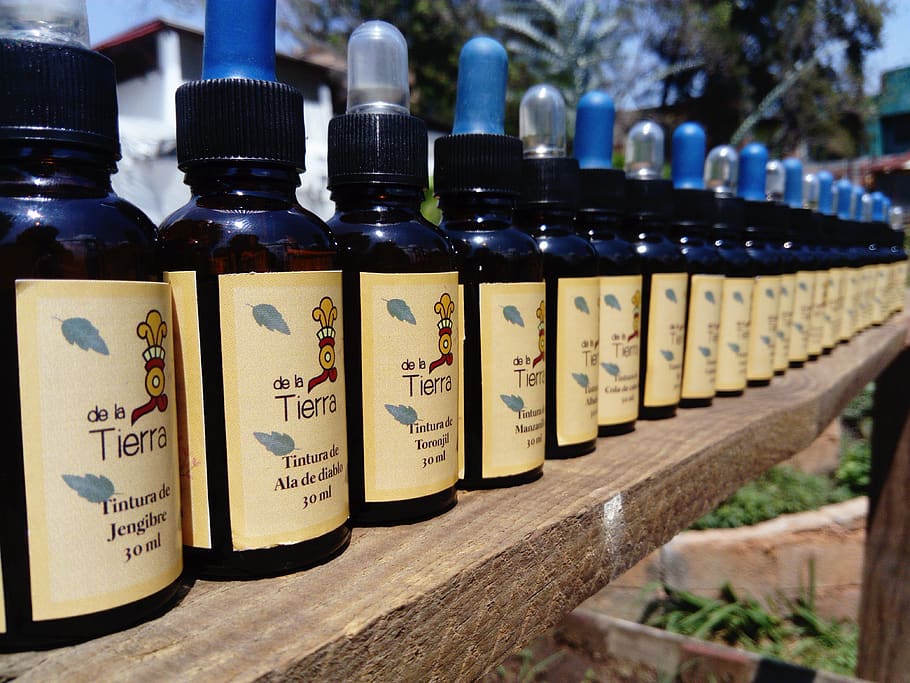
Different herbal traditions and different practitioners also differ in the forms in which herbs are used. I am speaking here of their use internally. One of the simplest ways is to take them as teas, which is the basis for folk practice and a large part of European herbalism. One of the most sophisticated forms of herbalism, traditional Chinese herbalism, most commonly employs herbs as “decoctions” a kind of “tea” in which the herbs are boiled together rather than just left to infuse. This is because many harder, woody plant parts are used as well as the softer leaves and flowers. Other forms used by herbalists are powders, pills and tinctures (liquid extracts made with vinegar, wine, strong alcohol or glycerol. The more sophisticated the method, the less it would be used in folk herbalism. When making tinctures, it is common to talk about “the folk method” and the “scientific method”, the difference being that the latter uses precise weights, measures, and percentages of alcohol (or whichever solvent is used). Professional herbalists prefer tinctures made with the scientific method.
Then, herbalists differ in whether they prefer to use single herbs or several herbs mixed together (“simples” versus “formulas”). Both have their advantages and disadvantages. Simples are easier to provide and to take, and it is easier to interpret the outcome of the treatment. Formulas can more easily address different aspects of a person’s health all at once, and can take advantage of synergies between herbs. Clearly the more experienced a herbalist is, the better they will be able to make up an effective formula whilst avoiding side-effects. Traditional Chinese Medicine very rarely employs single herbs. Happily, to help the less experienced practitioner, there are many classic formulas that have thousands of years of collective experience that guarantee their safety and effectiveness.
Finally, there are very great differences between herbalists of different regions, traditions and lineages as to dosing. Modern UK and North American herbalists tend to use much higher doses than those used in most of continental Europe. Chinese herbalism also uses high doses. Nevertheless, there are herbalists in the UK and North America who use tiny doses, usually of just one carefully selected herb at a time. It is believed that if the herb is precisely matched to the whole symptom picture and the physical, mental and behavioural characteristics of the person, just a few drops of tincture will be sufficient. In that respect this approach resembles homeopathy.
So the practice of herbal medicine varies considerably from place to place, tradition to tradition and practitioner to practitioner. My own background is in traditional European and traditional Chinese herbalism. I approach herbal medicine from a vitalistic and holistic standpoint. While I find the scientific study of herbs for their medicinal properties and benefits to be interesting and occasionally useful, I prioritise traditional knowledge. I favour the larger doses commonly used in the Anglophone countries and in China to the smaller ones preferred in continental Europe and the very small doses that some practitioners use. This is not to say that I believe other approaches are wrong. They all have their place and in the right hands, many different things can work well.
Note: This article was written by me, AI had no hand in it!
Photo: Royalty-free image from https://www.hippopx.com.

 Robert Hale Herbalist